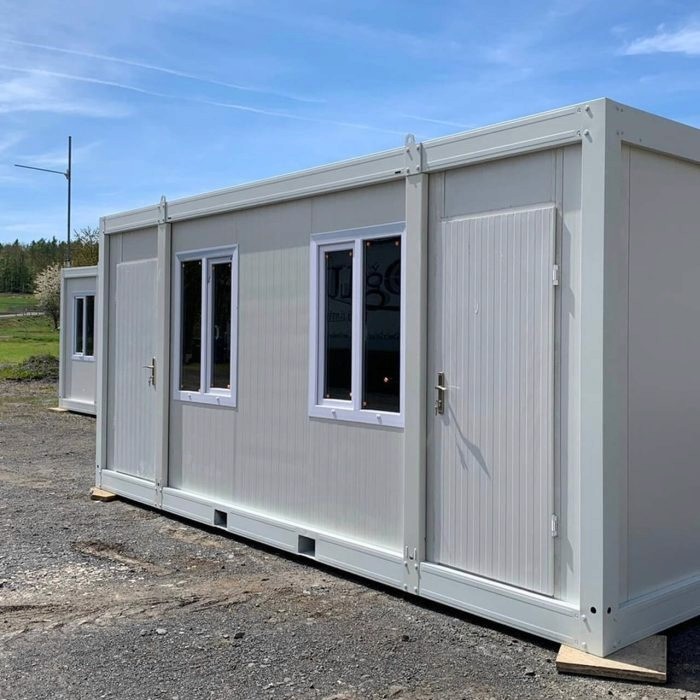
Fiber Reinforced Polymer (FRP) containers are high-performance storage and transport solutions made from a composite of glass fibers and a polymer matrix. Known for being lightweight yet exceptionally strong, they have largely replaced traditional materials like steel and wood in industries that demand high durability and resistance to harsh environments.
Key Advantages of FRP Containers
Corrosion & Chemical Resistance: Unlike steel, FRP does not rust or corrode. It is chemically inert, making it ideal for storing aggressive acids, alkalis, and solvents without degradation.
High Strength-to-Weight Ratio: FRP containers are significantly lighter than metal counterparts—often weighing approximately 40 kilograms for standard industrial sizes—while maintaining enough structural integrity to handle heavy pressures.
Exceptional Durability: These containers are impact-resistant and can withstand extreme temperature fluctuations and UV exposure without losing their shape or strength.
Hygienic & Food-Safe: Many FRP containers are made with 100% food-grade resin, making them non-porous and resistant to mold, mildew, and bacterial growth.
Low Maintenance: Because they are rust-proof and leak-proof, FRP containers require very little care and can last for decades, often exceeding a 50-year lifespan.
Common Applications
Chemical Industry: Used for the safe storage and transport of hazardous materials and corrosive substances.
Water & Wastewater Treatment: Preferred for storing potable water or treating wastewater due to their anti-algal and non-corrosive properties.
Food & Beverage: Ideal for transporting food products as they are non-toxic and do not absorb odours.
Marine & Industrial Use: Excellent for offshore applications where saltwater would quickly corrode metal containers.
Customization Options
FRP is highly adaptable and can be molded into various shapes (cylindrical, rectangular, or square) and sizes. Common customizations include:
Adjustable Heights: Tailored to meet specific industrial space requirements.
Accessory Integration: Addition of manways, level gauges, temperature sensors, and internal mixers.
Structural Variants: Available as vertical, horizontal, or underground tanks with varying wall thicknesses based on pressure needs.
FRP vs. Traditional Materials
Feature FRP Containers Steel/Metal Containers
Weight Lightweight (Easy to handle) Heavy (High transport costs)
Corrosion Immune to rust/corrosion Prone to rust and oxidation
Lifespan Up to 50+ years Typically 15–20 years
Maintenance Minimal; no painting needed Frequent painting/patching
Cost Higher initial cost; lower TCO Lower initial cost; high upkeep