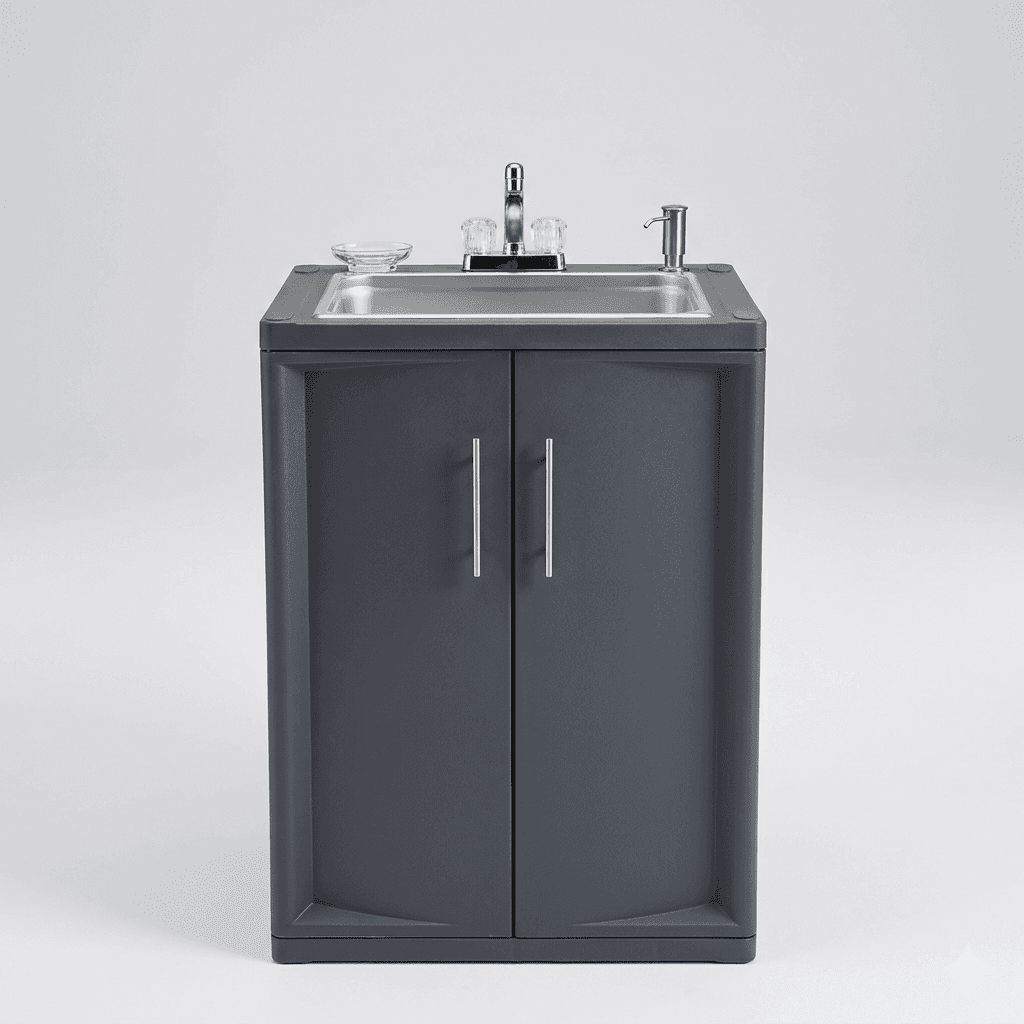
Portable handwash stations are self-contained, mobile hygiene units designed for areas where traditional plumbing is unavailable. They are critical for maintaining public health and regulatory compliance in environments like construction sites, outdoor events, and agricultural operations.
Core Components and Operation
Dual Tank System: These units typically feature two separate reservoirs: a fresh water tank (often ranging from 10L to 45L+) and a slightly larger waste (grey water) tank to prevent overflow.
Hands-Free Pumping: Most professional models utilize a foot-operated pump to dispense water, which is a key hygiene feature that minimizes cross-contamination by eliminating the need to touch faucet handles.
Integrated Amenities: Standard units come equipped with built-in dispensers for liquid soap and paper towels.
Mobility: Designed for easy relocation, they often feature heavy-duty rolling wheels and integrated carry handles.
Varieties and Use Cases
Camping and Off-Grid: Lightweight, compact models are popular for RV trips and remote campsites, often including 10–19L water tanks.
Commercial and Industrial: Larger, more robust units made from UV-resistant high-density polyethylene (HDPE) are used for high-traffic areas like construction sites and public gatherings.
Heated Options: Some advanced models offer electric pumps and hot and cold water options, which are ideal for food service vendors requiring specific temperature standards.
DIY Solutions: Simple stations can also be constructed using recycled materials like buckets, PVC piping, and manual spigots for budget-friendly or emergency use.