In the rail industry, composite materials are increasingly replacing traditional steel and aluminium to meet high-performance requirements for lightweighting, energy efficiency, and fire safety.
Key Rail Applications
Car Bodies & Bodyshells: Complete carbon fiber car bodies, such as the CETROVO 1.0 Carbon Star Express, can reduce overall train weight by 11% and energy consumption by 7%.
Interior Components: Composites dominate the interior segment, making up over 45% of the rail composites market. Applications include ceilings, window panels, seat shells, and modular toilets that offer superior fire, smoke, and toxicity (FST) performance.
Bogies & Running Gear: Emerging CFRP (Carbon Fiber Reinforced Polymer) bogie frames can be 25% to 50% lighter than steel equivalents, reducing track wear and noise.
Infrastructure: Composite sleepers (railroad ties) made from recycled materials are increasingly used as they are 40% cheaper than steel and do not rot like wood.
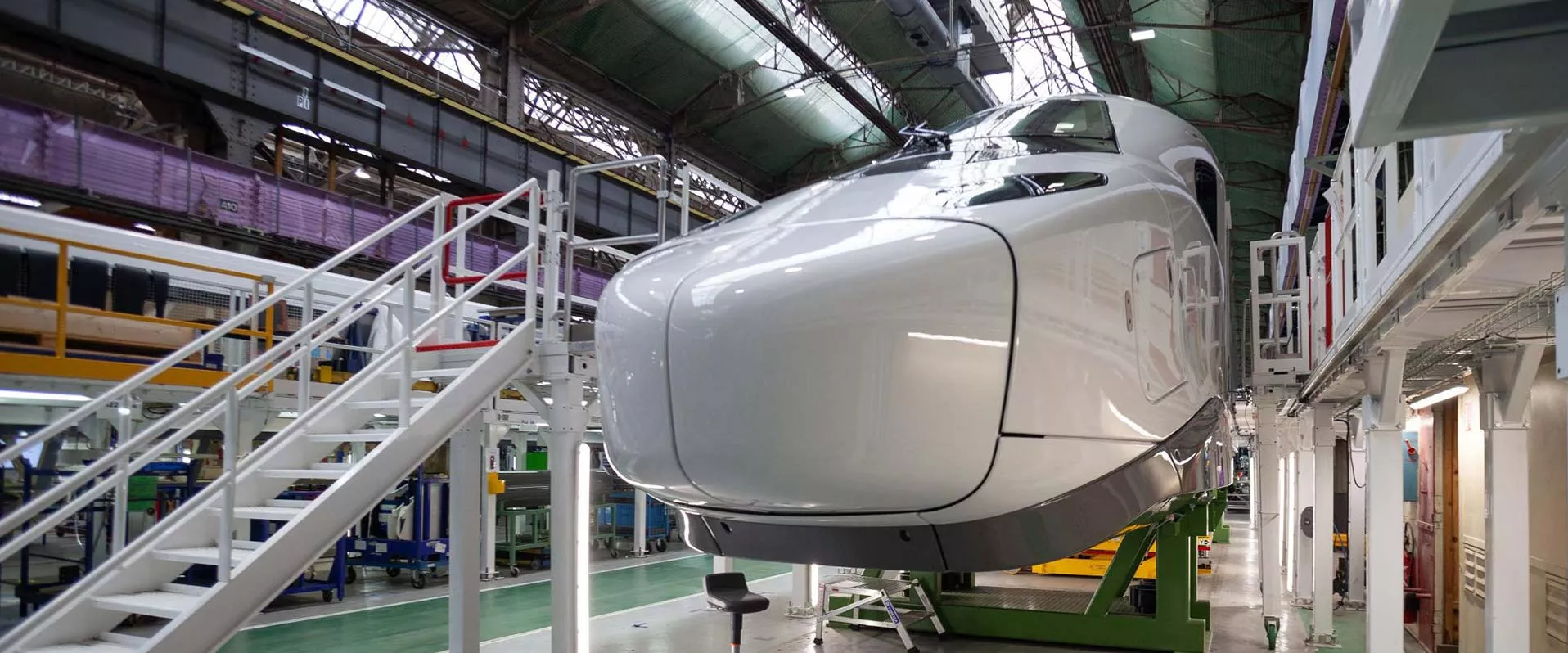
Front Noses: Aerodynamic front ends of high-speed trains are typically molded from glass or carbon fiber to withstand high-pressure waves when entering tunnels.
Strategic Material Benefits
Feature Benefit to Rail Operators
Weight ReductionFaster acceleration and up to 10% increase in electric train range.
Corrosion ResistanceDrastically lower maintenance costs, especially in harsh or coastal environments.
FST ComplianceSpecialized resins (e.g., SABIC LNP ELCRES FST) meet strict global fire safety standards like EN 45545.
Noise & VibrationNatural damping properties significantly enhance passenger comfort.